“There is no fear in love, but perfect love casts out fear; for fear has to do with punishment, and whoever fears has not reached perfection in love.”
-1 John 4:18
“There is no fear in love, but perfect love casts out fear; for fear has to do with punishment, and whoever fears has not reached perfection in love.”
-1 John 4:18
A Good Friday Meditation on Mark 14:66-72
I love the stories of Simon Peter in the gospel. In Christ’s call to Peter to tend my sheep, I hear my own call. We hear so many stories about Peter in the gospels – about his well-intentioned excitement, his yearning to be close to Jesus. To do things like be the first to walk on the water – and then overthink things and get scared. But today, we hear that this same person, who was so desperate to be close to Christ and embrace every step – this same person denies Jesus three times.
The fear around Jesus’ arrest, all that fear about what was going to happen next, can so easily through our whole selves. In these times of fear, it’s easy to let that fear overwhelm us and permeate everything, every little bit of us.
Before that night, Peter never would’ve imagined he’s chose fear and deny Jesus not just once but three times. If someone with as much love and devotion and knowledge of Christ as Peter had can fall prey to that fear, then we’re all capable of that too.
God, on the Good Fridays of our lives, it’s hard to see beyond the immensity of our fear and sadness, help us remember that your love is always – and undeniably – bigger.

Year B Palm Sunday
Jesus’ Triumphal Entry into Jerusalem
The Teaching of Jesus in the Temple (adaptation of Mark 12)
Preach at Christ Church Christiana Hundred in Wilmington, Delaware
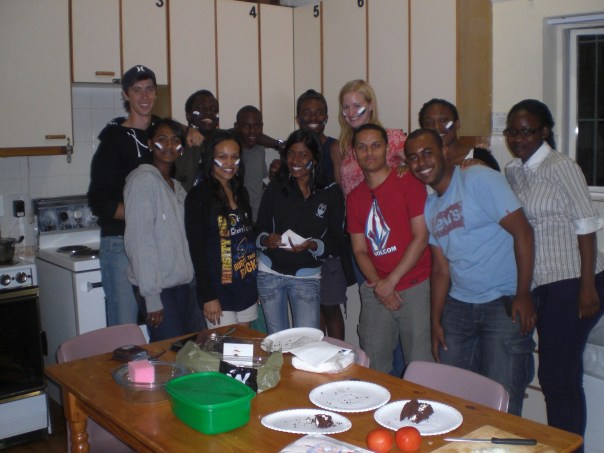
Three years ago, I spent Holy Week as a seminary intern at a small church plant in Brooklyn. I processed with palms through Bushwick, prayed through the night after Maundy Thursday, walked the Stations of the Cross on Good Friday, and embraced the joy of Easter. Being too far away to make it home to my family, I met up with some friends, lay leaders and clergy alike, for a festive Easter feast, full of exhausted laughter than rang out into the streets of Chelsea late into the night. The next morning, our Easter Monday sabbath, I embraced the resurrection triumph by sleeping in and then started to play on my phone to procrastinate getting out of bed. And I got a message. A picture popped up of one of my dear friends and housemates during my year in South Africa, someone I’d shared many laughs with, crowded around our kitchen table. My friend, my sister in Christ, Tylenia had died, suddenly, at 23 in some senseless car accident. I dropped my phone onto my chest, and it felt like a punch. All the glory of Easter vanished and suddenly I felt like I was back walking the stations of the cross. It was finished. Again.
The most important thing to remember about the gospel stories we’ve just heard is that these are the lessons that Jesus wanted to focus on conveying before his arrest and crucifixion; in these teachings, we hear what Christ knew was most important for us to remember as we begin our journey into Holy Week. Jesus’ knew that there were dark times ahead for the disciples and for all of his followers; he knew his death was coming even though they did not. Jesus called them – and still calls us – to do our part to stay in right relationship with God, so we’re prepared for whatever life throws our way. We’re beginning our journey through Holy Week and Christ is giving us a roadmap to follow. The story of Jesus’ teaching in the temple and the story of the Last Supper follow Jesus’ triumphant entry into Jerusalem but foreshadow the journey we’re embarking on as we begin Holy Week, and the story of the Passion that we’ll hear later in the service.
First, when we hear the summary from Mark 12 of Jesus’ teachings in the temple, we hear several rapid-fire stories of different teachings, with one common thread: to draw us closer to the kingdom of God. Jesus tells us which commandment is the greatest: to love the Lord our God with all our heart, and all our soul, and with all our mind, and all our strength. And to love our neighbors as ourselves. Then, Jesus praised the widow for giving all the had to God. God isn’t after the contents of our pockets: Chap Stick and credit cards. God wants us to offer up our whole hearts, our whole selves. Our Heavenly Father wants our whole trust. To love God with our whole hearts – to give all that we have like the widow did – we don’t only have to focus on God, we have to focus on loving each other, too. In real love, we let our guard down, which is why when we lose someone we love, we grieve. When I lost Ty, I remembered our laughs at the kitchen table in our home, our first University of Cape Town rugby game, our adventures traveling around the city. All the times we shared in joy and commiserated with each other in sadness. Grief longs for the community of shared joy as well as shared support in times of sorrow.
In the second part of Mark 12, we hear the story of the Passover meal: the narrative of the bread and wine that the disciples shared at the Last Supper and that we retell every Sunday. When we share the bread and the wine – Christ’s body and blood – we take in his life so that we can live in him. Part of the Eucharistic prayer is the retelling of the story. We say together: “Christ has died. Christ is risen. Christ will come again.” (Book of Common Prayer, 363). In our prayer together, the bread and the wine become the body & blood of Christ. They become a sacrament, a vessel of God’s Grace. For there to be a sacrament – any sacrament – the faith of the people is required. A priest alone in a room cannot consecrate bread and wine. Just like in the first half of Mark’s gospel: we love God better by loving each other. We’re all in this together
When I was on pilgrimage to Jerusalem last month, one of the great joys of my time there was the people, both my fellow pilgrims as well as the people we met along the way. On our last day in Jerusalem, we visited the site where the procession of palms began. Then, we made our way to Gethsemane, the garden where Jesus and the disciples went on the night before his arrest and crucifixion. There is a beautiful church where we prayed, and outside is a beautiful garden of olive trees. But if it weren’t for the evangelizing of one of my dear fellow pilgrims, I would’ve missed the very best part. If you stand in just the right spot, in the middle of all of those twisted trees, where Jesus prayed, awaiting the grief he knew was coming. If you stand in just the right spot, you can look through the trees, towards the walls around Jerusalem and see the Messiah’s Gate, the gate Jesus rode through in the triumphant entry we just read about at the beginning of the service. You can see the glorious gate framed by the knotty olive trees of Gethsemane.

Isn’t always just so that you can see the place of triumph so clearly – and yet just out of reach – from the place of grief? It’s a summary of the full spectrum of human emotion that we go through during Holy Week. Between the triumphant entry of Palm Sunday and the joy of the resurrection at Easter, we have the grief of Holy Week, the grief of Jesus’ passion and death. What makes the griefs we experience in lives so powerful – what made my grief for my friend so powerful – is that amid the darkness of grief like twisted olive trees, we can see – just out of reach – our own Messiah’s gate – our own place of great triumph, and – more importantly – great love. In Holy Week, we experience the ways God is with us through all of that – which makes coming out the other side in Easter even more powerful! The people I’ve grieved live on in me, Jesus’ teachings live on in us.
One of the hardest parts about grieving Ty from so far away was that there was no one around me who knew her, nevertheless loved her. I don’t think I was able to completely accept losing my friend until 10 months later, when I went to South Africa and had lunch with two of our other housemates, who could sit in Gethsemane with me and acknowledge how much we still miss her, and look back longingly at the Messiah’s gate, our glory days just out of reach. To fully appreciate the joy of the resurrection, we have to acknowledge the grief of the passion and crucifixion. I invite you to join us this week on that journey, for our Maundy Thursday and Good Friday services. Jesus’ glorious entry into Jerusalem led into the teachings we heard today in the summary of Mark 12. Part of loving God with our whole hearts is loving each other with our whole hearts, and sharing in the sacramental life together. And we need all the connection points to God – all the love and glory and laud and honor – we can get when the moments of triumph in our lives give way to experiences of grief and hardship. So, let us live that teaching and sow love with each other as we gather around the table today, and sacrifice our praise and thanksgiving to God, having faith in that love to be our daily bread, next time we get caught spending a long night in Gethsemane, with our glory days just out of reach, we can endure because of the love that keeps watch with us.
Year A, Lent 3
Psalm 19
Christ Church Christiana Hundred, Wilmington, DE
This Lent, my colleagues and I committed to preaching on the psalms, an exciting challenge for all of us. More than usual, this sermon evolved over the course of the morning’s services, so the video does not include the Jordan River bit that I prayerfully extroverted, then added to the script below.
Sunday Sermon – March 4, 2018 from Christ Church Christiana Hundred on Vimeo.
One of my practices at the end of the day is to recount the things that I am grateful for. Sometimes, my gratitude for the riches of the day blinds me from my gratitude for my journey to the day. I’m grateful for my education. In high school, I always knew I would go on to college. I was quiet, but I did well in school. Generally, I was quite a rule-follower, too; I wanted to do the right thing, you know? Even if my vision for my life didn’t always line up with my parents’, I didn’t want to let them down. And though I went to high school in a post-Columbine world, I felt safe. I can’t imagine what it feels like for high schoolers now. I am overwhelmed by the violence and the pain it causes. It sounds like the youth of our nation are fed up, too, as they vocally cry out and peacefully march. Some schools are threatening suspension or loss of prom or graduation for students who walk out. In an age where competition for college is greater and greater, no one wants a stain on their application. How can they choose between securing their future and securing their present safety – our future? It’s challenging enough to do the right thing when the answer to the problem is clear; what happens when we can’t figure it out?
In the heart of today’s psalm, Psalm 19, the psalmist tells us about the glory of doing things “God’s way.” He spends three verses – verses 7-9 – on the Lord’s law, testimony, statutes, commandments, fear, and judgements; many of which are fairly synonymous. Together, these things make up the God’s will, for our world as a whole and for God’s call in each of our lives. When we say the Lord’s Prayer – the prayer Jesus taught the disciples – God’s will on earth is what we’re praying when we say “Thy Kingdom come.” Praying for God’s kingdom is praying for a world that follows God’s call as a community and as individuals. The Psalmist describes following each piece of the way of the Lord as reviving the soul, giving wisdom, rejoicing the heart, and always enduring.
In verse 10, the Psalmist summarizes of God’s law and testimony as more desirable than gold and the sweetest of honey. An important thing to know to fully understand this verse is: During the Old Testament times, honey was a rare enough commodity that it was considered a luxury, more on par with gold than it is by today’s standards. So, for all the soul-reviving, wisdom-granting, heart-rejoicing, and always-enduring aspects of the Lord’s commandments – the way of life we pray for – these things are not only associated with items of the highest value but with items that are rare. See, even for knowing that God’s will for our lives is best, most enlightening way of life that offers for the greatest reward: we get to verse 12 and the psalmist says “Who can tell how often he offends? Cleanse me from my secret faults”
The Psalmist, just like us, struggles. The Pslamist knows that God’s law is the best way to live – something better than gold – but he also knows that it’s hard to figure out how to do the right things. Do any of us know how often we offend? How many secret faults do I have that I am blind to? When we join together in saying the confession there’s that line about “things that we have left undone.” When I say the confession, I’m more comfortable in naming ways that I may have fallen short than I am in having to acknowledge that I might have some blind spots. The first two thirds of today’s psalm are all a set up for the last third: the psalmist is asking God for help to do the right thing. “God, please keep me from making the same mistake again, and while you’re at it, please help me make fewer new mistakes.” Sometimes, part of the challenge of doing the right thing means knowing what the right thing is. Our lives are filled with some pretty murky waters.
Last month, during my pilgrimage to Israel, I had the great joy of renewing my baptismal vows while standing in the Jordan River. While the way of life that these promises calls us to remains clear, the waters of the Jordan River are actually quite murky. Standing knee-deep in that river, I couldn’t see my feet, but I could still recommit myself to my baptism, no matter how much lack of clarity surrounded me.
Lucky for us, our Lord and Savior is Jesus, who spent a good portion his earthly life wandering around healing people because of their faith or the faith of those around them. I’ve heard the story of Jesus restoring the sight of the blind beggar; it helps me keep the faith the Christ can restore my sight to the blind spots in my heart that keep me from seeing which is the right decision.
Thomas Merton, a twentieth century theologian and writer, penned one of my favorite prayers, which is known at the “Thomas Merton Prayer.” I couldn’t help but think of it, when I read today’s psalm. It begins; “My Lord God, I have no idea where I am going” and continues “the fact that I think that I am following your will does not mean that I am actually doing so. But I believe that the desire to please you does, in fact, please you. And I hope I have that desire in all that I am doing.” Don’t we all want that desire? When I struggle to discern God’s will, I take comfort in believing that that desire to please God does please God.
For all the psalmist’s pleas to God to help him discern God’s will and follow God’s law, he is clearly aware of God’s presence. This whole journey of declaring the glory of God’s will and begging for strength to follow it begins with the psalmist reveling in the glory of God’s creation; “The heavens declare the glory of God and the firmament shows God’s’ handiwork.” Every day. Every corner of the earth. Every glorious sunrise and sunset. God is visible in God’s creation. God reveals Godself in Creation. While the psalmist makes it clear the glory of following God is even greater, these first verses provide us a roadmap that Creation is the first place we are to look for God: the trees and the flowers and howling wind and the warm rain… and us. Humanity. We are a part of Creation. There is a piece of Christ in every human heart. We get to know God better by getting to know each other. We are agents in helping to manifest God’s transformation at work in all of our lives; thy kingdom come, indeed!
One of the reasons our life together as a Christian community is that when we share our faith with each other – whether it’s in a church, in a Growth Group, on a night ride home, or sitting on a rooftop in some strange city – it makes us vulnerable. When we are vulnerable with each other, we reveal Christ to each other and get to know God better. One of the promises we make in our Baptismal Covenant is to “continue in the apostles’ teaching and fellowship, in the breaking of bread, and in the prayers.” All of these things are connected: apostles’ teaching and fellowship. Because learning about God and being in community together are inextricably linked. When I am struggling to do the right thing, I can ask for help. When I can’t see what the right thing is from where I am, my friend can tell me how things look from her perspective. We’re all in this together, and I am so grateful. I don’t know about you, but I can’t imagine figuring it all out on my own.
We all know the right thing is usually not the easy thing. It’s made harder still when we can’t even identify the right thing. But we have us. Our community. When I say the “Our Father,” I take comfort in the our, in the prayer’s line to “forgive us our trespasses, as we forgive.” There are no I’s in the Lord’s Prayer, or the Confession of Sins. We need the support of everyone in the church to welcome someone in Baptism. Our Sunday mornings are filled with this communal language because we are all in this together. One step at a time. It’s the only way we’re going to navigate God’s law and live a life richer than gold. Thy kingdom come, indeed.
My Lord God, I have no idea where I am going.
I do not see the road ahead of me.
I cannot know for certain where it will end.
Nor do I really know myself, and the fact that
I think I am following Your will does not mean that I am
actually doing so. But I believe that the desire to please You
does in fact please you.
And I hope I have that desire in all that I am doing.
I hope that I will never do anything apart from that desire.
And I know that, if I do this, You will lead me by the right road,
though I may know nothing about it.
Therefore I will trust You always though I may seem to be lost
and in the shadow of death.
I will not fear, for You are ever with me,
and You will never leave me to face my perils alone.
-Thomas Merton
Achievement Unlocked: Preach a sermon that incorporates the Matrix
(Also, this is probably the only way I’d ever preach using pill imagergy 😉 )
“Follow me.” Christ’s words to Phillip are also calling us. God calls each of us into a new way of being, and we choose whether we answer, and whether we follow.
It’s the second Sunday after Epiphany and the second Sunday of our new sermon series: Resolutions. How can we resolve to be better Christians with the gift of each new day, month, year? Last week, Stephen reminded us that God isn’t calling us to do things because “we’re supposed to”. The choices we make with our lives – the choice to be here – should be about what quenches our thirst and feed our hearts. Following Jesus is the best way to quench our thirst, and for all the ways we follow Jesus by keeping the same covenant to love God and to love each other, God also has a unique call to each of us. God doesn’t care about checking boxes. God knows the best way to nourish the unique piece of Christ in each of our hearts and call us into something bigger. We have to listen, and we have to keep our hearts open to all possibilities, as we chose to go right or left, north or south, red pill or blue pill.
Have any of y’all ever seen the Matrix? In The Matrix, the protagonist, a hacker named Neo, has spent much of his life searching for answers about the world he lives in and the nature of reality. Even within the wild imaginings of brilliant sci-fi, we can all relate to seasons of searching for answers in our lives. In time, all of Neo’s searching causes some strange things to start happening to him: things that don’t make any sense or that he can’t explain. Just as Neo starts to fear for his life, he gets the opportunity to sit down with a man named Morpheous, who has all of the answers he’s been seeking but who warns him that these answers don’t come easily and he needs to decide if he’s willing to take on the weight of listening to such a big truth. Morpheus tells Neo he has two choices, offering him either a red pill or a blue pill. He can take a blue pill and wake up in his bed, believing whatever he wants to believe OR he can take the red pill and embrace this new Wonderland-like reality he’s stumbled into, and see how deep the rabbit hole goes. Could you ever imagine giving up all you know to leap wildly into something more? How can you even be sure that a wild leap is the right one?
I don’t know about you, but sometimes, with all the noise of loud radios and long to-do lists, I worry my own ability to listen. What if I get distracted? I don’t want to miss my cue from the Holy Spirit. Luckily, we have the story of God calling Samuel to comfort us in these seasons of worry. God called Samuel’s name four times before Samuel answered. Samuel heard a voice but didn’t know the source. When Samuel didn’t know what was happening, God persisted. God persists with us, too. If you know me well, you know I can be rather strong-willed, so I’ve tested this. Thoroughly. God’s will is stronger. God knows that God knows us better than we know ourselves.
God knows we sometimes need to hear things more than once, because God knows us. God knows each and every one of us, In today’s gospel passage, Jesus calls Phillip, and Phillip calls Nathaniel. When Nathaniel approaches Christ, ready to follow, Jesus exclaims about Nathaniel’s honesty. Nathaniel is shocked that Jesus already knows him so well, asking “Where did you get to know me?” Christ sees every part of us, even the parts of us that we don’t yet see of ourselves. God sees all of the good and all of the bad and loves us so completely all the same and it is from this complete, radical love that God calls us, each and every one of us to that path that is best for us and unique to us in the choices we make for our vocations, our relationships, and the rabbit holes of life that we might be bold enough to explore.
Christ called Phillip and Nathaniel differently from each other and differently from how God called Samuel. God called Samuel repeatedly and by name. Jesus spoke directly to Phillip, saying “Follow me”, but Jesus knew that the best way to call Nathaniel was not with clear instructions from an unfamiliar face. So, Jesus sent Phillip to find Nathaniel, and Nathaniel’s call consisted of a longer explanation spoken through someone Nathanael already trusted. One of the many benefits of there being a piece of Christ in every human heart is that God’s call to us can come through the mouths of those around us, friends and strangers. With Nathanael, Jesus knew he needed to hear from a friend, whether or not Nathanael knew he needed to hear his call that way in order to be able to answer it.
When Eli helped Samuel figure out God’s call, Eli taught Samuel how to answer readily – to say “Speak, for your servant is listening” Samuel’s answer surrenders his own will in favor of God’s will and the transforming power of God’s love. Part of being a good listener means hearing even the things that we don’t want to hear, that we’re not ready to hear, and that don’t fit with the vision we thought we had of what our lives should be. To let go of the false reality of the blue pill and the choose the life-altering truth of the red one. To be completely open to the transformation of God’s radical love, we need to surrender any expectations we might have that limit its ability to fill our hearts. We need to say, “Here we are, the servants of the Lord, let it be with us according to your word”
God knows us better than we know ourselves. God knows everything we are and everything we can be, even the things we may think we cannot be – or haven’t yet figured out we can be. God called Samuel as a boy knowing who Samuel could grow into as a man. God’s patient persistence journeys with us throughout our lives and through every transformation. Our God is the god who from the darkness created heaven and earth, all that is seen and unseen. Our God is the god who defeated death, and who promises us eternal life. Just as God did these things on God’s time, transformation that happen on God’s time, regardless of what our idea is of how things should go.
Our lives are a series of choices. Shouldn’t we all be striving to be brave enough to choose the red pill? Choosing to answer God’s call is a choice we can make every day. It is a part of all of the other choices we make about how we focus our time and energy, our work and education, and our love for all of those around us. Let us resolve today and every day to choose God: to choose to listen and be in relationship; to choose to join together each Sunday and quench our thirst in the waters of baptism and feast on the grace, as we break bread together at the altar. to choose to be open to every possibility God might be calling us to, even the ones that we’d never imagined. “Speak, Lord, your servants are listening”
Christmas 1
John 1:1-18
Preached on December 31, 2017 at St Mark’s Episcopal Church in Basking Ridge, NJ.
Merry Christmas and Happy New Year!
Christmas is one of the primary feasts in our church life, and it lasts twelve whole days. I love that beautiful Christmas story we hear: It’s the story of, as we hear in John’s gospel today, the Word becoming flesh and living among us. Mary and Joseph journeyed all the way to Bethlehem to welcome the Christ Child in a barn, because that’s all our God needed, even with the same frail human flesh we have. This is Jesus Christ: the Light of the World, who doesn’t need anything more than a humble space in our hearts to outshine the darkness of our world, even on these cold, winter nights.
Growing up, every few years my parents and I would go to visit my dad’s family in Mississippi for Christmas. I would always stay with my aunt, uncle, and cousins. When I was a teenager, they got a cat: Duke. Duke was a strawberry blonde tabby cat who liked to sneak out of the house and get in fights with other cats. He was, as many cats are, adorable, but he was also cool and aloof and neurotic…. And very proud. He did NOT like to be held. However, late at night, when we were all asleep, Duke would sneak up to someone for a visit. I vividly remember waking up in the middle of the night from deep sleep to someone tapping me on the should. I’d been lying on my side and as soon as I rolled onto my back to see what was happening, the culprit, Duke, would hope onto my chest to demand attention. I’d pet him and he’d purr, only content to be so affectionate in the middle of the night, when he thought I might not be able to see or remember. For all of his tomcat pride and prowess, Duke needed to feel a loving hand on his back sometimes, just as much as each of us does.
As Christians and people of community, we already know that none of us exist in a vacuum…although all of us came from one.
Today’s gospel passage from the first chapter of John begins “In the beginning was the Word;” John speaks of Christ much as the Book of Genesis speaks of Creation. In the beginning, the earth was a formless void, and the first thing God created was light, separating light from darkness. As we’re reminded in the poetry of today’s gospel from John, God created light to shine in the darkness. God called that light – and everything else that God lovingly made (and sometimes perfected through evolution) – GOOD. What God creates is Good. What God creates is never lacking. What God creates is always enough. Any voice that says otherwise is not God’s voice
What God creates always enough to outshine the darkness. And God created this whole beautiful world, and then decided that this world needed each and every one of us. Because the Word was God; these four words from John’s gospel today remind us that God is part of all things God calls into being. God is part of all of us, just as we are reminded in our baptism that there is a piece of Christ in every human soul. The Word in every human heart. God’s love in every human skin.
The poetry of today’s gospel passage is beautiful, and at times confusing, but some things are made quite clear; “The Word became flesh and dwelt among us.” That is what happened on Christmas. Love came down, and Christ was born of a woman. God came and was born as a baby. The infant Jesus needed to be held and fed and cleaned by human hands just as we did at our birth. Because part of humanity is that we need the love and care of others in order to grow and then, accordingly, we are called to sow this love into the world, too. Sometimes, just like Duke the cat, we all need a loving hand on our back to make it through the long cold night. Through the Light of the World, love shines in the darkness, and the darkness does not overcome it.
The Christmas moment where God took on frail human flesh is the incarnation – it’s central to our faith. Jesus’ death, resurrection and ascension – aka the Easter promise that ensures forgiveness of all our sins – first required our fully divine God to also be fully human: frail, beautiful, and lovingly-made, just like each and every one of us.
In my daily journeys throughout this world we live in, I am on the receiving a lot of messages about human bodies and a few more specific ones about my own. As a society, we’re quick to label certain people’s bodies as perfect (cough only God is perfect cough), even though images these same bodies are then airbrushed before they can be published. Even our standards of beauty don’t make sense. We’ve definitely got some work to do, and we are starting to do it. On a very large scale, we’re finally starting to have some much overdue conversations about appropriate ways to talk about and engage with each other about our human bodies: their shapes, sizes, genders, colors, ages. As a society, we’re taking steps, but it’s going to take some time. And all the messages we get about our bodies not being “good enough” go directly against what we read in Genesis; where God called humanity into being and called us “good.” Both John’s Gospel and Genesis teach us the even in this darkness, the light shines. The light shines and the darkness does not overcome it.
In our baptism and confirmation, we all promise to seek and serve Christ in all people. All people includes humans who do things like cut us off in traffic or give us the stink eye or who offer unwanted commentary on our bodies. All people includes those who incite feelings of shame in us, and therefore, all people can include ourselves. Sometimes we forget what we’ve learned from God and what we’ve read in Genesis and John. Sometimes we’re tempted to look at our imperfect human hearts and imperfect human bodies and think one or the other is not “good enough”. But seeking and serving the Christ in all people includes the Christ in ourselves, in our unique and imperfect human hearts and bodies, all shaped by God in Creation. All called “good” by God; any voice that says otherwise comes from somewhere else – somewhere dark. Lucky for us, John reminds us today that the light shines in the darkness and the darkness does not overcome it.
And the light we’re talking about – that’s the light of Christmas – That’s Jesus Christ. Jesus Christ: The Light of World, whose love will shine into every dark, sad, shame-filled corner of our hearts, if we’re open to letting Him in. Jesus Christ, fully divine and fully human, took on frail human flesh to help us love better. God believed a human body could help us learn to love each other better, and nowhere in our gospels is there a single reference to any sort of divine height, weight, or six pack. The Christmas Story is about love, a God who loved the world so much that God took on flesh and dwelt among us in a human body just like ours. Following Christ means embodying the light of this love every day. It means loving our neighbors and ourselves just as God does: one character flaw, one laugh line, and one lovingly-crafted human heart at a time.
Year B Advent 4
Luke 1:26-38
Preached on Sunday, December 16 at Christ Church Christiana Hundred in Wilmington, DE
Sunday Sermon – December 17, 2017 from Christ Church Christiana Hundred on Vimeo.
May my soul proclaim the greatness of the Lord and my spirit rejoice in God my savior.
The song of Mary is my all-time favorite passage of scripture. In it she proclaims love, faith, and joy – with no sign of fear in the face of the change that God is calling her to. Her words set to music appear in our hymnal – S186[1] – one of my all-time favorites. Today’s gospel passage is just a few verses before her song.
What prompts a song to begin with?
One of my recent leisure activities has been to rewatch one of my favorite shows from my teenage years called Roswell. It’s a typical teen drama, but with healthy splash of science fiction: think 90210 but with aliens. In the past week or so, one of my favorite scenes came up. In this scene, a few of our heroes, human and alien alike, decide to throw a silly, impromptu dance party and rock out to some late-nineties pop music. One of the reasons that I like it so much is that I can picture my friends and I engaging in this exactly activity. Whether we were ten-year-olds and wanting to be Spice Girl, fifteen-year-olds and in the thralls of high school crushes, or thirty-year-olds and trying to deal with the crazy rush hour traffic near the construction merge on 141-North, there is always a song to belt out and dance to break into for every occasion as my hundred iTunes playlists further attest
Today’s gospel gives us the occasion for Mary’s song. We hear the story of Gabriel visiting Mary and delivering news that changed not just her life but all our lives. In the face of a message from God that redefined her world, Mary saw that this was not the end, chose faith overe fear, and found her song. Just before she burst into song, she proclaimed; “Here I am the servant of the Lord. Let it be with me according to your word.”
Every new beginning comes from some other beginning’s end.[2] Our lives our full of beginnings and ends: births and deaths, new jobs and graduations, falling in and out of love. In our efforts to live as best we can, we dream dreams and make plans to achieve them. I imagine Mary had a plan for her life, too, before Gabriel showed up with all of his fanfare, and we know Joseph was a part of her plan. The world Mary lived in can feel far away to us, but within it, I’m sure Mary’s plans had the same bottom line as our plans do: Mary sought to build the best possible life for herself, and for whatever risk that might include for her, she sought to keep herself and those closes to her safe. One straightforward way to stay safe for her, and every other woman of her time, was to avoid getting pregnant outside of marriage, something considered a crime in her world. The punishment for this crime was death by stoning, a painful way to meet one’s earthly end. Gabriel’s message brought an end to the plan Mary had had. All the laws that the governed our human world and that science has determined about human life told Mary that God’s new plan was impossible, but Mary chose faith. Mary stayed true. Mary didn’t tell Gabriel to go find some other young woman. Mary said yes. To paraphrase REM, for all the ways that it’s the end of Mary’s world as she knows it, and she feels fine. So fine (and faithful!), that she cries out “Here I am. The servant of the Lord. Let it be with me according to your word.” She accepts that God has a new beginning for her and bursts into song.
When the changes and chances of our lives and the winds of the Holy Spirit sweep in, it’s so easy to fall prey the fear that creeps in in the midst of all our grief as our lives are upturned, but as Ruth told on the first Sunday of Advent, the Greek word “apocalypto” actually means “to reveal, to uncover, to disclose.” After Gabriel greets Mary and before he delivers the message to her from God, the angel sees that Mary is perplexed and says “Do not fear.” But when we’ve been hurt along the way – knocked to our knees more than once – it can be hard to trust. It can feel like the safer route is to prepare ourselves for all of the bad possibilities out there rather than to have faith and choose to hope for the good ones.
Let me say that again: It can feel like the safer route is to prepare ourselves for all of the bad possibilities out there rather than to have faith and choose to hope for the good ones.
What God calls us to – and what Mary models for us in today’s gospel passage and in her song– is to choose hope. Perfect love casts our fear.[3] Last week, Stephen told us that when we are struggling to find the new beginning – the new life – that follows each ending, we are called – in our struggle – to strive to be found by God at peace. Being faithful means choosing hope, and choosing to believe in the endless possibilities of God gives us the peace we need to choose hope in the midst of the unknown. When Gabriel says to Mary “Do not fear” and reveals to her God’s plan for her life, Mary chooses faith in God over fear of the unknown and just before she bursts into song, she cries out “Here I am. The servant of the Lord. Let it be with me according to your word.”
We have songs for dance parties and songs for broken hearts. In the age of iTunes, there can be a playlist for every occasion, every emotion: for striving to choose hope and for rejoicing in that hope from God. There’s a reason we take care in selecting the songs for our first dance, our senior prom. Music can take us to moments or great feeling with people through whom we experience God’s love so deeply. Our songs have great power. There is a song on all of hearts that we go to when we jump for joy. In the words of a band called the New Radicals, “Don’t let go; you’ve got the music in you.”[4] And the music gives us hope. There is a song on each of our hearts to proclaim our love for God and to sing hope rather than fear. In this season of Advent, we are preparing for the coming of Christ – for the light of the world to come in the midst of the darkness.[5] Because Mary said “yes” to God. Mary had faith that in God all things are possible. She showed us what it looks like to choose hope in a world of fear, and just before she burst into song, she proclaimed “Here I am, the servant of the Lord, let it be with me according to your word.”
Here we are, the servants of the Lord, let it be with us according to your word.
[1] The Hymnal 1982
[2] Semisonic “Closing Time”
[3] 1 John
[4] https://www.youtube.com/watch?v=DL7-CKirWZE
[5] For the voice to cry out in the midst of the wilderness
Year A: Epiphany VII
Leviticus 19:1-2,9-18
1 Corinthians 3:10-11,16-23
Matthew 5:38-48
Psalm 119:33-40
Preached at The Church of the Holy Cross, North Plainfield, NJ
Do you not know that you are God’s temple and that God’s Spirit dwells in you? If anyone destroys God’s temple, God will destroy that person. For God’s temple is holy, and you are that temple.[1]
Paul reminds us today that we are temples. We are God’s people. This is why I keep talking about the sacred spaces of our hearts being such fertile ground for the Holy Spirit to descend like a dove and fill us with as much love as we can open ourselves up to receiving. Paul’s words and our God’s unfailing presence are much-needed comfort for us in a world of rapid change, politics charged on multiple fronts, and many temptations to create division between ourselves and other humans on a daily basis.
Last week, I talked to you all a bit about the context of Paul’s letter to the still-forming Church in Corinth – a community Paul had helped to found but was not called to stay with. Last week, we heard Paul address the tension and conflict stirring within the community of Corinthians. This week, Paul builds on the importance of our unity as God’s people to remind and to teach the Corinthians what they were – and what we are still – called to build together. While, like any skilled Lego Master Building, what we each are called to build will differ, we have a common foundation: that foundation is Jesus Christ.
What does it mean to have a foundation in Jesus Christ? Well, this week, we hear a lot about the Law. The passage we said/sang from Psalm 119 is all about praying to keep God’s law and to incline our hearts towards God’s desires for us and God’s law. Before I entered seminary, I didn’t have much use for the Psalms, but I’ve come to really, deeply, appreciate them. The beauty I found in today’s Psalm is that call for order. As someone who enjoys planning, I can relate to what the Psalmist calls for today: the prayer to God to tell me what to do, to give me rules so that I can follow them and maybe feel more in control in a chaotic world. In this plea, I find myself feeling more grateful than ever for the apostles’ teaching and fellowship – for our fellowship – figuring out how to keep our hearts open together.
Our Old Testament reading takes us back to Leviticus, a challenging, stern, and at times rather funny book, which in today’s passage covers several statements of law, including one that takes us again back to our discussion last week about how we orient our hearts. As God’s people, we can’t afford to let any hate for our human kin into our hearts, no matter how tempted we are in these days of division. Instead, we’re called to love our neighbor as we love ourselves, regardless of whether or not our neighbor loves us. Even the gospel passage from Matthew includes a list of decrees, but again, notice what they have in common? In the midst of all of this talk about keeping the Law, minding facts we learn with our heads, we are also hearing about love and about what we should be doing with our hearts: loving God, loving our neighbor as we love ourselves, loving even when it goes against what is happening around us, seeking and serving Christ in all persons, just as we promise in our baptism. Just as we work together to uphold with fellowship modeled after the apostles.
After declaring our belief in God, Father, Son and Holy Spirit, in the words of the Apostles’ Creed; the first promise we make in our baptismal covenant is that we will continue in the apostles’ teaching and fellowship, in the breaking of the bread – our communion in communion – and in the prayers. That fellowship is especially important; it seals us together whether we’re gathering together around a table to break bread for a parish dinner or in Holy Communion. This fellowship is our commitment to working together and to loving together to live into these promises we make in our baptism, to being Christ to each other on good days and bad, to hold each other up, to love each other as best we can and in doing so proclaim by both word and deed – love – the Good News of God in Christ. It happens everywhere from adult study to those late-night conversations with our nearest and dearest where we ask each other “Is this the right thing to do? Is this the right risk, the right leap? What path is the most right? How can I be the most loving?”
When the chaotic world is too sad and too complicated. When the rules we’re trying to follow seem too many to remember or become too overwhelming. When we’re in a situation where the promises we make in our baptism are challenging us and we don’t know how to begin seeking and serving Christ or what it means in this particular instance to strive for justice and peace among all people. This is when we use the love to tie it all together. This is when we remember that the foundation we have in Jesus Christ is held together in love: love for each other, love for baby Julian, love for our family and friends, love for strangers, love for enemies. The best way we can live into our promise to respect the dignity of every human being is to be love in a world that so desperately needs it. That needs Christ and the Christ in each and every one of us. Part of what makes our baptism so beautiful is that it’s not just about making these promises for the newly baptized. In Julian’s baptism, we also renew these promises for ourselves and in doing so, we promise to help Julian and to help each other do our best to be the love in a world that so desperately needs it. From holding a door to lending an ear to saying a prayer. From offering our neighbor a coat from Betty’s Basement or a meal at Neighbors Feeding Neighbors. Today, Paul teaches us that a skilled master builder needs a foundation in Jesus Christ and all the laws and promises that make that up are cemented together in love.
In our Baptismal covenant, we find what it means to be a faith community, cemented together in love – and love isn’t just a noun. Love is a verb, something we do, an action in a world that needs it. Acting in love is what makes us alive, living as the living temples that Paul teaches us we are called to be with a firm foundation in Jesus Christ. “Do you not know that you are God’s temple and that God’s Spirit dwells in you?” This is a question to the community as a whole, the entire Christian church in Corinth. To suggest that God dwells among the gathered community was radical in first-century Corinth, because previously God was understood to dwell in the temple in Jerusalem. But God dwells here, too. In this building and in each of us and we are charged with carrying God and the Good News of Jesus Christ out into the world, whole in loving each other as our heavenly father is whole in loving us
[1] 1 Corinthians 3:16-17
Happy are they who seek the Lord with all their hearts.[1]
As I was meditating on today’s scriptures and their common thread of upholding the law, I noticed that this is not the only thing they have in common; in today’s scripture passages, we hear a lot about minding our hearts. Now, I’m not talking about minding our hearts in the Valentine’s Day sense, although all of this heart talk is seasonally appropriate. I’m talking about not getting stuck in our heads – on reason alone – when we’re trying to think through something in a world that requires a focus on something greater. Interestingly enough, it’s the scripture passage that doesn’t use the word “heart” that captures this best.
The only reading today in which the word “heart” doesn’t appear is the reading from 1st Corinthians. Typical, that Paul would be difficult. I guess that’s how we know that the Holy Spirit is there though, isn’t it? 1 Corinthians best PR [2] is the passage about love that people read for weddings or write in Valentine’s, but this letter – and the rest of the New Testament letters – are about so much more. The letters from Paul that we read in scripture are the story of the early church being formed. The leaders who are persecuted in Acts are persecuted because they dared travel from city to city in the early world and proclaim the gospel and convert people to way of Jesus Christ. Our church’s bold commitment to being counter-culture is in our deepest roots. The city of Corinth, the destination of the letter we’re reading from today, was a key city in Greece, but for all of Paul’s evangelism, he couldn’t stay there forever. That just wasn’t his call. Nevertheless, he writes to the people of Corinth as his brothers and sisters in Christ to help them mend their hearts. In the first half of today’s New Testament reading, we hear that there is division among the people of the Church in Corinth. Paul cautions us against a way of life focused only on “human inclinations” – followed our own individual agendas to best take care of ourselves as individuals. In order to avoid jealousy, quarrelling, and other things that cause us to sin by dividing us from our neighbors, we need to focus on God’s agenda. As Paul writes to the people of Corinth in today’s passage, for all of the good work of humans to found the church and share the fellowship, it is always God who makes our faith grow and who calls us to live and love more richly by following Christ [319]
We are each given minds that work in different and beautiful ways, as developmental psychologist Howard Gardner addressed in his brilliant work on the eight-to-ten different kinds of intelligences he believes we all possess in different quantities, but in addition to our ability to reason in whatever type of intelligence God has given us, we must also be careful stewards of our hearts. After all, in today’s reading from Deuteronomy, what keeps the Israelites from hearing God and living into God’s commandments isn’t their ears or their mind’s ability to process the words.[3] What the Israelites are told to do is to keep their hearts turned to God above all. Our hearts know whether we are keeping God’s commandments because they can feel whether what we’re doing is good and is bringing us closer to God or whether what we’re doing is sin and is causing division.
In a few days it will be Valentine’s Day, the pressures of which can be challenging. Couples can enjoy hearts-and-candy bliss, if they can rise above the pressures of perfection. Those of us not part of a couple can enjoy a day spent with beloved family or friends, celebrating other kinds of love, but for anyone who is struggling with loneliness or recovering for a particularly potent heartbreak, the day can be filled with sadness or misery, accentuating feelings of loneliness , invisibility, or simply being “not good enough.”
Loneliness is also common at Christmas time, a fact that is easy to forget in spite of hearing stories like “A Christmas Carol” or “How the Grinch Stole Christmas”. The Grinch, whose bitterness from one bad day, one bad turn, one rough morning commute, one time he encountered a problem before his morning tea turned into a bitter, grumpy, grinchy-ness with so much unprocessed grief and anger that his heart turned away from God – that’s how, over time, a heart can shrink down to two sizes too small. Clearly, the Grinch didn’t come to church and listen to sermons that called him to be Christmas everyday; after all, he could hardly stand the one.
The Grinch had deep-seated wounds. Though we do not know what the cause of these wounds are they are wounds that kept him from being in community. They were wounds that kept him from accepting what good about him. They were wounds that convinced him that others did not accept him for who he was, so he lived alone with his dog, max. The Grinch’s insecurity around these wounds gave him the kind of bitter thoughts that Matthew cautions us against in today’s gospel passage – the kind that poison our hearts.[4]
All of this poison in his heart made him steal Christmas from every Who in Whoville, but what makes this story so beautiful is how it backfired. For all of the things that the Grinch stole, he couldn’t steal what irked him most about Christmas: the part where every Who gathered together and held hands and sang out joyfully. See, every Who who sang knew what mattered, what brings us together every week: the Love. I remember standing on those blue steps in Junior Choir and singing “Love the Lord will all your heart and soul and mind and strength. I will love the Lord with all I am.” Whole self love. Love with an open heart for the Holy Spirit to descend like a dove and help us grow with God. Love that transforms. The collective love of every Who in Whoville helped transform the Grinch, whose heart grew three sizes that day, wide open, transformed by love, and swelling with space for the Holy Spirit to work through him and love him, with the beautiful grace we live into each Sunday when we, too, pray for the forgiveness of our sins.
Last week, I revealed to you all how when my own job search dragged on. For a time, I struggled to keep my insecurities from poisoning me by making me believe that I wasn’t good enough. “Not enough” is not in our God’s vocabulary and it is not a phrase that will bring us into a deeper relationship with our Creator. Like Gardner’s theory of multiple intelligences teaches us that there are many ways to try to qualify the beauty of a brain, we as followers of Christ must remember that our God fed five thousand people with two fish and created us in perfect, Goldilocks approved, just-right proportions, whether we are part of a pair or not.
Like the Grinch, we each carry around our own wounds. And like the Grinch we can choose to hold on to them or let them go. We can choose to work through them or let them work on us. We can choose to walk with them or flee from them. If we choose to face our wounds and walk with them then we are able to discover that we are loved by God just as we are, and that the Holy Spirit, in a mysterious way, is living at the center of the wound, descending upon us all like a dove even when things get messy and loving us with a love that transforms even with all of our imperfections.
So just how do you walk with wounds that are so deep and so alienating? The answer Paul gives is Christ and the crucifixion. Christ who understands and identifies with our loneliness. Christ who carries our wounds. And by doing so, shows us the God who loves us. It is in Christ that we can learn we belong – belong to a community of the wounded. It is in Christ that we learn that we are loved, in spite of our woundedness. And it is in the community of the wounded who encounter the living God in Christ, in whom we are healed, through our life together; our shared journey; our open, swelling, hearts; and our Baptism. Baptism reminds us of the story of God’s love that comes to us amid our woundedness to give us healing and life. Baptism, just like weeping, requires water. It also reminds us of dying and rising with Christ, whose ugly death in the wounds of the crucifixion was a necessary stop on the journey to resurrection, and sets us on a path of walking with our woundedness in order to find life therein.
So as you walk through those doors today, walk boldly in all your strength from God and all of the imperfections of your wounds, knowing the Holy Spirit can descend upon your heart in joy or in pain. As the psalmist writes, Happy are we who seek the Lord will all our hearts[5]: all our hearts and souls and minds and strength. All our love. All God’s love. All that we are, wounds included.
[1] Psalm 119:2
[2] 1 Corinthians 13
[3] Deuteronomy 30:15-20
[4] Matthew 5:21-37
[5] Psalm 119:2
a 20-something gets down with TEC
Can one find reconciliation in themselves after rejection?
 Ann Kathryne Urinoski